


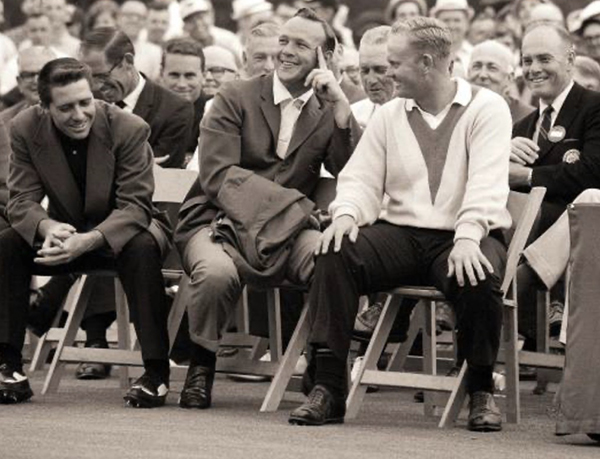
Augusta, GA – Augusta National has witnessed dynasties and dominant performances across nearly a century of Masters Tournaments. Tiger Woods’ four victories in a compressed period around the turn of the millennium. Jack Nicklaus’ six green jackets spread over decades. Yet no seven-year span matches the sheer star power, unrelenting drama, and historical weight of the stretch from 1960 through 1966.
In those seven consecutive Masters, the winners’ list reads like a Hall of Fame roll call: Arnold Palmer (1960, 1962, 1964), Gary Player (1961), and Jack Nicklaus (1963, 1965, 1966). Three wins apiece for Palmer and Nicklaus. One maiden green jacket for Player. Nothing else. No other names on the trophy. Just the Big Three — the trio that didn’t just dominate golf but helped transform it into the global television spectacle it remains today.

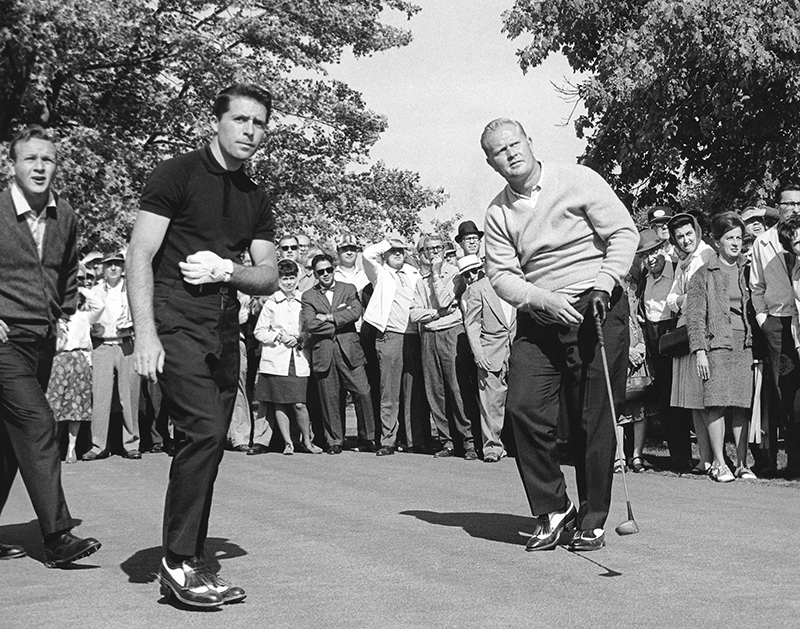
This wasn’t a single superstar running away with the event while the field faded. It was three of the greatest players who ever lived trading blows at the peak of their powers, often with the other two right there in contention.
Palmer, the charismatic King with his swashbuckling style and Arnie’s Army charging up the hills. Player, the fitness-obsessed international pioneer who proved the game belonged to the world. And Nicklaus, the Golden Bear, whose methodical brilliance was just beginning to cast a long shadow.
The run began in 1960, when Palmer, already a two-time major winner, went wire-to-wire, birdieing the 17th and 18th holes on Sunday to edge Ken Venturi by a single stroke.

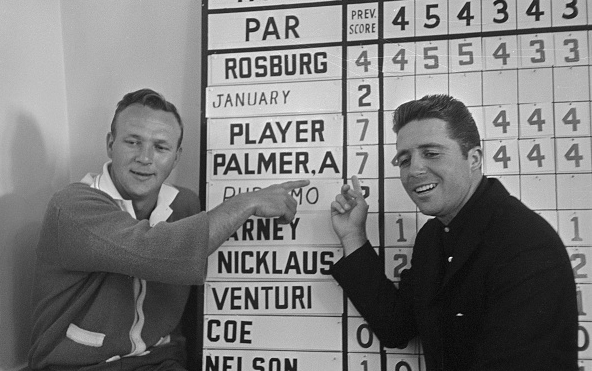
It was classic Palmer theater: bold, emotional, and impossible to look away from. His lifelong philosophy, inherited from his father Deacon Palmer, captured it perfectly: “Hit it hard, boy. Go find it and hit it hard again.”
A year later, in 1961, Player became the first non-American winner in 20 years, capitalizing when Palmer famously double-bogeyed the 72nd hole. Player later reflected on the breakthrough with characteristic determination: “I came to the Masters to win, to become a world champion.”
Palmer bounced back in 1962, outlasting Player and Dow Finsterwald in an 18-hole playoff—another chapter in the intense yet respectful rivalries that defined the era.

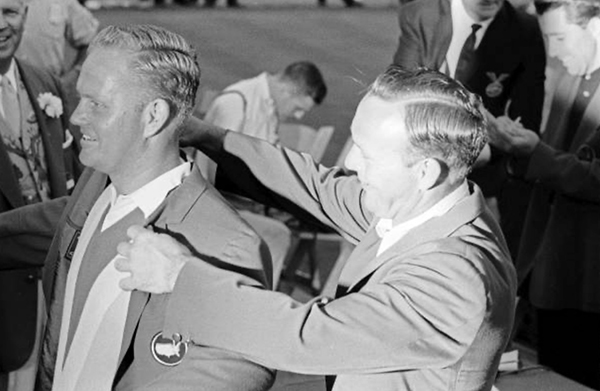
Then came the changing of the guard. In 1963, a 23-year-old Nicklaus claimed his first green jacket, holding off Palmer by one shot. Nicklaus later described the significance: “It’s always tougher to win the first one.” It was a preview of the rivalry that would define the decade.
Palmer responded with his fourth Masters title in 1964, winning by six. But 1965 belonged to Nicklaus in a way Augusta had rarely seen: a record-setting 17-under 271, nine shots clear of Palmer and Player tied for second.
Even Bobby Jones, the course’s co-founder, was left in awe, famously telling reporters, “Nicklaus played a game with which I am not familiar.” Nicklaus himself recalled the week with quiet satisfaction: “I never played a more enjoyable round of golf in my life… Those two Masters created some wonderful memories for me.”

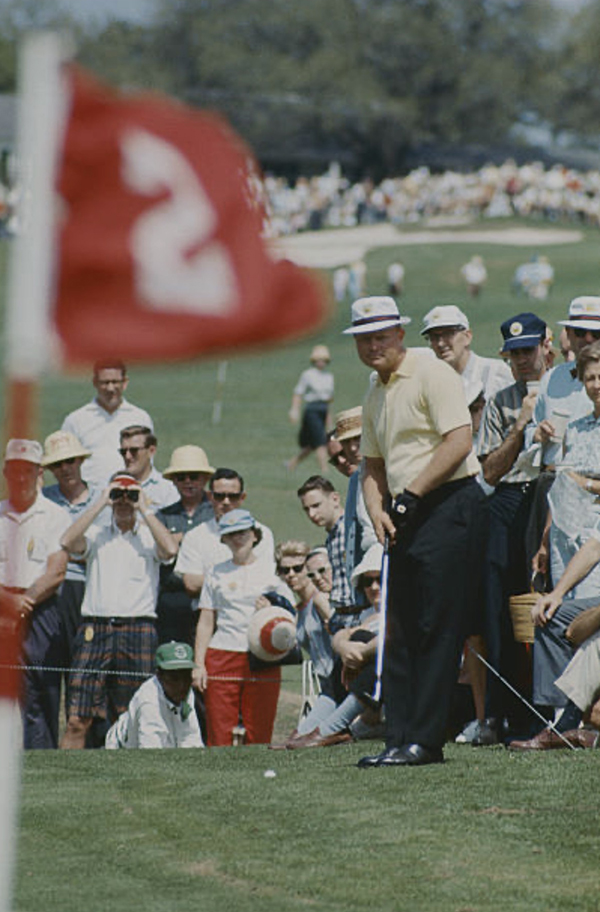
The stretch closed in 1966 with Nicklaus becoming the first player to successfully defend his Masters title. It took an 18-hole playoff against Tommy Jacobs and Gay Brewer on a brutally firm setup, but the result was another green jacket for the Big Three.
What makes this era stand out isn’t just the names—it’s the exclusivity and the context. From 1960 to 1966, Palmer, Player, and Nicklaus were the only winners. They combined for 13 Masters titles overall in their careers, but this was the period when they owned the tournament outright. It coincided with golf’s explosion in popularity.
Palmer’s charisma and the rise of television turned the Masters into must-see Sunday afternoon drama. Arnie’s Army packed the galleries, and millions more tuned in from home. Player brought an international flair that expanded the game’s reach. Nicklaus, arriving as the young heavyweight, forced everyone to elevate their game.

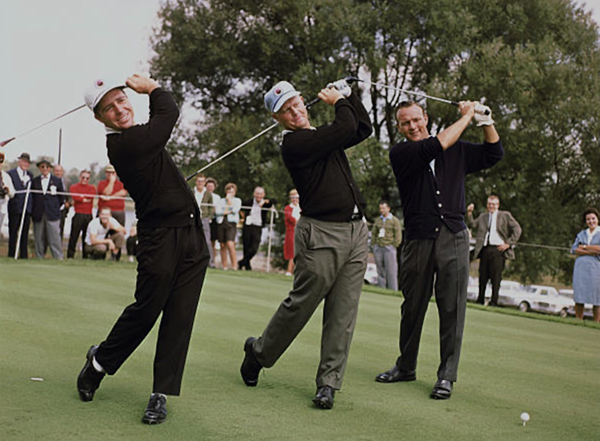
Rivalries fueled it all, yet so did deep respect. The three men pushed one another relentlessly but celebrated each other’s successes. Jack Nicklaus captured the spirit years later: “We had a great rivalry and we’d go out and beat each other’s brains out… And we’d get done, we’d shake hands and say, ‘Well played.’” He added warmly of his relationship with Palmer: “He was my friend. He was for a long time my opponent, but he always was my friend.”
Compare it to other notable stretches. Woods’ run produced five Masters wins, but they weren’t consecutive in the same way and came amid other forces. Nicklaus’ own later dominance was more spread out. Sam Snead and Ben Hogan had their peaks, but never with this kind of back-and-forth monopoly alongside a third legend. The 1960-66 stretch stands alone: seven straight years, three immortals, zero room for anyone else.

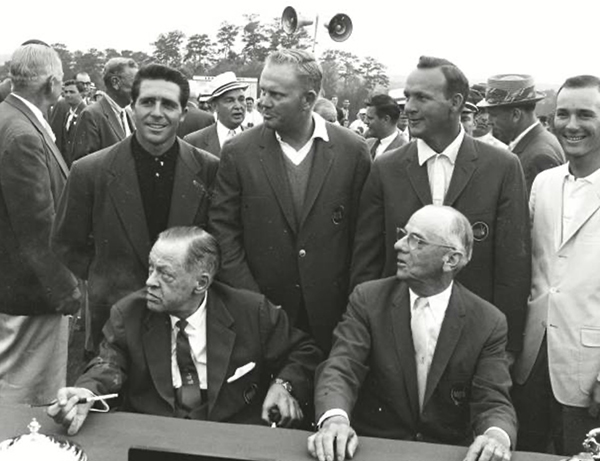
More than half a century later, the echoes remain. Whenever the Masters returns each April, the ghosts of Palmer, Player, and Nicklaus hover over those fairways and greens. Their names are etched on the champions’ wall. Their styles — Palmer’s flair, Player’s grit, Nicklaus’ precision — still represent the gold standard.
In an era when the game was finding its modern identity, those seven tournaments delivered the ultimate showcase: the best players in the world, at their absolute best, trading the game’s most coveted prize. No other stretch in Masters history has come close. It wasn’t just great golf. It was the golden age of the green jacket.

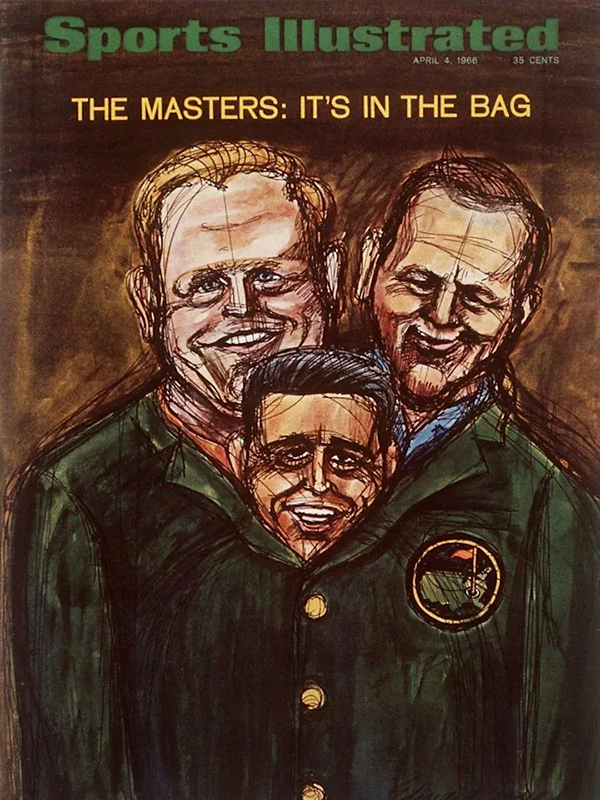
The Big 3’s Dominant Era at Augusta
- 1960: Palmer (1st), Player (6th), Nicklaus (13th/Low Am)
- 1961: Player (1st), Palmer (2nd), Nicklaus (7th)
- 1962: Palmer (1st), Player (2nd), Nicklaus (15th)
- 1963: Nicklaus (1st), Player (5th), Palmer (9th)
- 1964: Palmer (1st), Nicklaus (2nd), Player (5th)
- 1965: Nicklaus (1st), Player (2nd), Palmer (2nd)
- 1966: Nicklaus (1st), Palmer (4th), Player (28th)
- Nicklaus: 1st, 1st, 1st, 2nd, 7th, 13th, 15th
- Palmer: 1st, 1st, 1st, 2nd, 2nd, 4th, 9th
- Player: 1st, 2nd, 2nd, 5th, 6th, 9th, 28th


