


PONTE VEDRA BEACH, Fla. — The PGA Tour confirmed Thursday it has eliminated 56 full-time positions — roughly 4% of its global workforce of more than 1,300 — and placed another 73 roles on hold as part of a broader efficiency drive.
New CEO Brian Rolapp described the cuts in an internal memo as “difficult but important” steps required under the Tour’s partnership with Strategic Sports Group (SSG), the private-equity consortium that invested $1.5 billion (with potential to reach $3 billion) into the newly formed PGA Tour Enterprises.
The layoffs come just days after the Tour quietly confirmed it will remove its two iconic Hawaii events — The Sentry, a signature event at Kapalua, and the long-running Sony Open in Honolulu — from the 2027 schedule, ending more than five decades of tradition in the Aloha State.
The Hawaii Exit: Tradition Sacrificed for a Leaner, Domestic-Focused Calendar

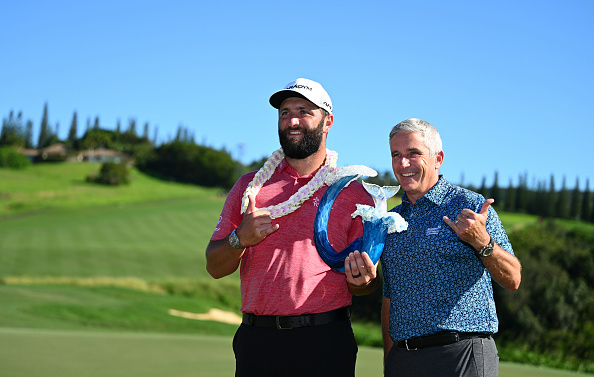
The Sentry (formerly the Tournament of Champions) and Sony Open have anchored the PGA Tour’s season opener since the early 1970s, generating an estimated $150 million in annual economic impact for Hawaii. The Sentry alone was worth roughly $50 million to Maui; the Sony Open added another $100 million-plus in tourism and charity to greater Honolulu region.
Officials cited high travel costs, logistical headaches, and the push for a more compact, high-stakes schedule centered on bigger domestic markets and signature events. The Sentry was already scrapped for 2026 due to Maui’s water-rights battle that left the Plantation Course essentially dead.
Private Equity’s Bottom-Line Mandate

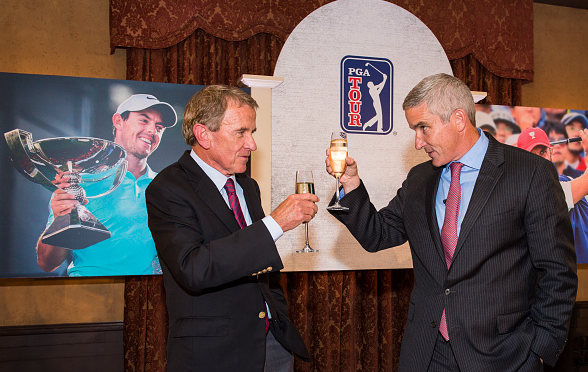
SSG’s arrival has brought a corporate mindset to an organization long accustomed to nonprofit-style growth. With the Saudi Public Investment Fund’s (PIF) full involvement stalled, the Tour is now operating without the massive war chest once envisioned — forcing Rolapp and his team to deliver returns on SSG’s investment through payroll trims and calendar surgery.
The Projection Play: Last Weekend’s LIV Golf Smear Campaign
Full mask-off moment: ESPN’s Rich Eisen & LIV Golf critic Alan Shipnuck revel in PGA Tour’s planned struggle sessions for LIV defectors.
“There’s gonna be some sort of tribunal. They’ll have to confess to their crimes… it’s gonna be fun to watch.” #LIVGolf #PGATour pic.twitter.com/7wZUKLUuPB
— Jeff Smith (@JeffSmithGolf) April 19, 2026
What makes Thursday’s announcements especially noteworthy is the timing — and the narrative that dominated the golf media ecosystem just days earlier. Over the weekend of April 18-20 (and peaking a few days earlier, April 15-16), pro-PGA Tour voices and aligned outlets aggressively pushed a near-identical storyline about LIV Golf: impending event cancellations, ROI demands, executive “spin,” and potential layoffs.
Rolapp himself engaged publicly amid the speculation while his own organization was days away from announcing two longtime events would be killed off and 4% of his staff would receive pink slips.
"Brooks Koepka came back to the PGA because he made a phone call and said he was ready to come back..
I'm interested in whatever makes the PGA Tour better" ~ @brianrolapp #PMSLive pic.twitter.com/bQ1ysqwd6h
— Pat McAfee (@PatMcAfeeShow) April 20, 2026
It’s a particularly poor optic for Rolapp: he knew the PGA Tour was grappling with the same financial strains LIV Golf and CEO Scott O’Neil were being hammered over, yet he allowed — or participated in — the aggressive narrative push. The PIF’s push for LIV self-sustainability gave them a kernel of truth to weaponize.
Rumors of Saudi PIF pulling the plug before the Mexico City event, and executives quietly job-hunting flooded airwaves, social feeds, and columns. Commentators framed it as proof LIV was unsustainable.
Yet here we are: it was the PGA Tour executing staff reductions and shuttering long-standing events, not its rival.
ICYMI: Golf Channel's journalistic
FAIL! Rich Lerner brings on
LIV smear merchant Eamon Lynch for a "straight BREAKING NEWS" segment on (you guessed it) LIV Golf. The "straight news" part lasted about 18 seconds. #LIVGolf #LIVGolfMexico pic.twitter.com/8I8GaBiEea— Jeff Smith (@JeffSmithGolf) April 20, 2026
This was textbook projection — usually reserved for politics, a media strategy of accusing your opponent of the very sins you’re about to commit. The moves had been in the works for months as SSG reviewed the books; the layoffs were reportedly recommended by consultants brought in late 2025. By flooding the zone with LIV crisis stories, PGA-aligned media created a convenient smokescreen.
They even had a kernel of truth to work with (a key to any successful hoax): similar to the SSG demands of the PGA Tour, the PIF has pushed LIV toward a more self-sustaining model with less reliance on direct Saudi subsidies.
But that partial fact was weaponized into a full-blown smear campaign designed to portray LIV as the chaotic, money-losing outlier — precisely so that when the PGA Tour took the same medicine under American private equity, the sting would be softened and the narrative framed as “prudent business.”

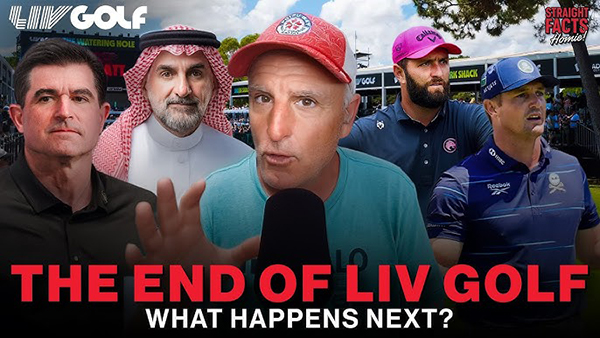
Reality: Both tours face modern golf economics. The PGA Tour is shifting to fewer, bigger events in major U.S. cities while LIV Golf is focusing on a more global product.
What It Means
For employees in Ponte Vedra, the message is unmistakable: the private-equity era means every line item — every flight to a tournament, every headquarters role — is now under the microscope.
And for the broader golf world watching the information war unfold, Thursday’s announcement, coupled with Tuesday’s bombshell, offers a stark reminder: sometimes the loudest accusations are simply previews of what’s coming next (from the accuser).
The same narrative the PGA Tour media sold hard last weekend about LIV is now the PGA Tour’s own reality.


