


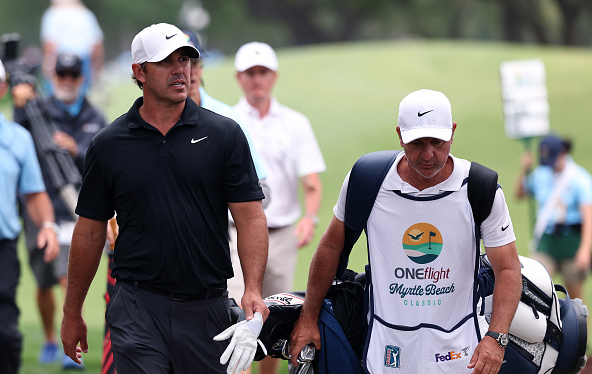
Brooks Koepka had a rather unforgiving word for his failure to qualify for the FedEx Cup Playoffs following his much-hyped return to the PGA Tour.
“Pathetic.”
He was equally brutal assessing the bigger picture. At 36, an age Koepka still considers within his competitive prime, he couldn’t understand how a player of his caliber has gone essentially “two years” without producing a top-10 finish.
There’s just one problem with Koepka’s assessment. It has actually been considerably longer than two years.
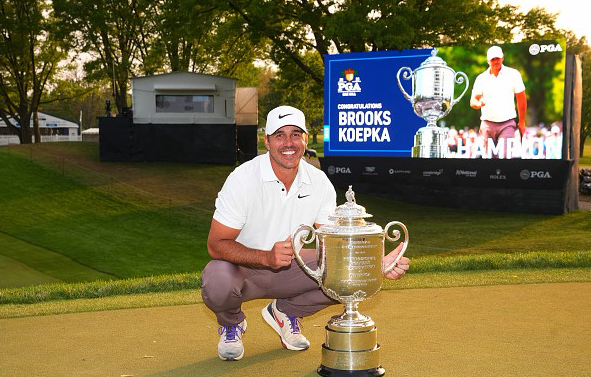
In major championships, Koepka’s last top-10 came when he won the 2023 PGA Championship at Oak Hill.
That was more than three years ago.
Since then: 14 majors. Zero top 10s.

Perhaps Koepka simply misspoke or was speaking generally rather than consulting his resume. But it’s an interesting mistake.
Because describing it as “two years” makes the drought sound considerably less alarming than it actually is. Two years can still feel like an extended slump. More than three years — 14 consecutive majors spanning the remainder of 2023 and the entire 2024, 2025 and 2026 major seasons — starts looking like something fundamentally different.
And you wonder whether there is a subconscious element to Koepka compressing the timeline.
Maybe it’s nothing. Or maybe a golfer who still thinks of himself as being in his prime isn’t quite ready to confront just how long it has been since the major-championship version of Brooks Koepka actually looked like Brooks Koepka.
Call it a competitive confidence reflex. Great athletes tend to possess remarkably selective memories. They remember the victories, the shots, the moments when they proved everyone wrong. They have to believe the next great performance is right there.
Perhaps saying “two years” is simply Koepka mentally keeping Oak Hill closer than it really is. Because admitting the actual timeline forces a much more uncomfortable question.
This isn’t two disappointing seasons anymore. It has been more than three full seasons, spanning four calendar years.

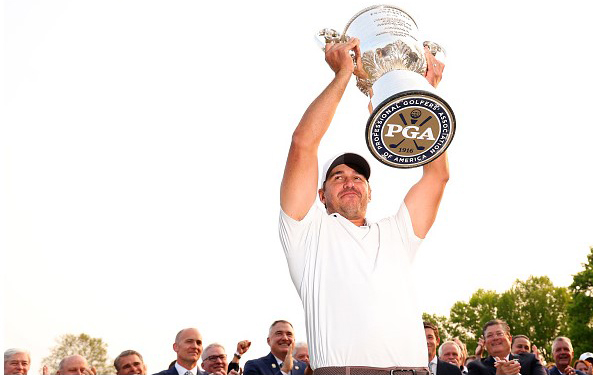
And if Brooks Koepka is really still in his prime, where has prime Brooks Koepka been?
Or maybe he isn’t inexplicably playing this poorly during his prime.
Maybe Brooks Koepka’s prime is simply over.
That doesn’t mean he’s finished. It doesn’t mean he can’t win again. It doesn’t even mean major championship No. 6 isn’t still somewhere in his future.
At 36, Koepka could have plenty of great golf left. But there is an important distinction between a golfer’s peak, his broader prime, and his remaining capacity for greatness.
Koepka’s peak was historic. His prime survived beyond it, increasingly interrupted by injury and inconsistency. And now the evidence suggests he has entered another stage entirely: The post-prime champion’s phase.
The sustained excellence is gone. The greatness may not be.
When Major Brooks Was Almost Automatic
To appreciate the change, remember what Koepka once was.

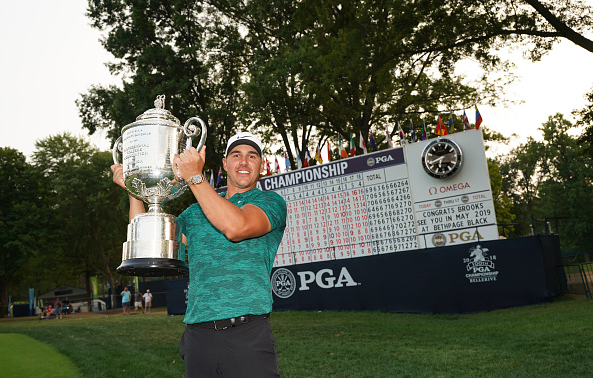
His major-championship emergence began before the victories. From 2014 through 2016, Koepka recorded four top 10s in 10 majors, including three top fives.
Then he exploded.
From the 2017 U.S. Open through the 2019 U.S. Open, Koepka played nine majors. He won four. He finished runner-up twice.
Six top-two finishes in nine starts.
That wasn’t merely a hot streak. It was one of the great concentrated stretches of major championship golf in the modern era.
At his absolute peak, Koepka didn’t occasionally summon his best golf for majors. It was simply there.
The U.S. Open arrived. Brooks contended.
The PGA Championship arrived. Brooks contended.
Another major arrived. There he was again.
That was peak Koepka: a remarkably high baseline sitting unusually close to an historic ceiling.
Then, beginning in 2020, those two things started pulling apart.
The First Cracks
At a fall tournament to start the 2020 season — still using the wraparound schedule, Koepka revealed he’d undergone a stem cell procedure in August to repair a torn tendon in his left knee.
Ironically, a then 29-year-old Koepka, coming off an historic major season (2nd, 1st, 2nd, 4th), said he was motivated to win even more major titles in the “five, six years left” of his prime.
“You know, I’ve got five, six years left of probably my prime I guess you could say,” said Koepka. “I want to see how far I can take it. I’m a little extra motivated. Feeling 100% is nice, but extremely motivated to see how far I can push it.”
A month later he slipped on wet concrete at the CJ Cup, aggravating the same left knee. He withdrew and would be plagued by the same knee pain for much of 2020.
That 2020 season was unlike anything professional golf had experienced. COVID-19 demolished the normal calendar. The Open Championship was canceled altogether, while the PGA Championship, U.S. Open and Masters were pushed to August, September and November, respectively, and weirdly contested without fans.

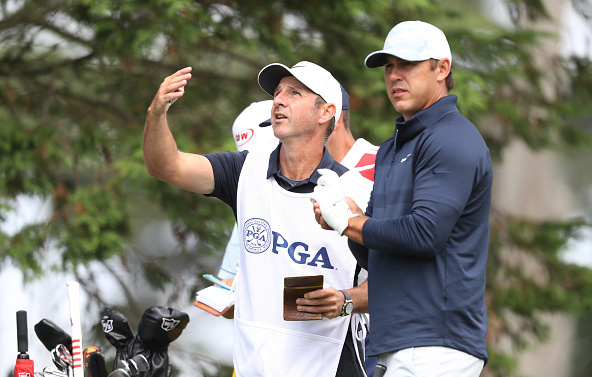
The strange cadence may have mattered to a player who had become famous for emotionally elevating himself specifically for majors. The lack of electric galleries and a big-stage atmosphere may have mattered, too.
But those are theories. The physical problems were real.
In his first start of the COVID-delayed major season, Koepka finished T29 at the PGA Championship in August, an ordinary result for most golfers but noteworthy for him. It was the first time since becoming established on Tour that he’d failed to finish inside the top 15 at the PGA.
Soon afterward, the same knee and hip problems ended his FedEx Cup Playoffs and forced him out of the U.S. Open in late September.
For the first time, the nearly indestructible major-championship version of Koepka was beginning to look vulnerable.
Then came November. Koepka returned for the delayed Masters and finished T7.
The pattern that would define the next few years had begun: the consistency was deteriorating but the elite golf was still there.
His Body Kept Interrupting His Prime
Knee problems followed him into 2021 too. This time it was the right knee.
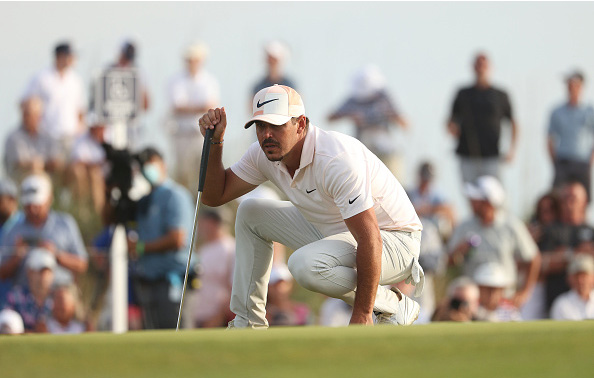
In March, only weeks before the Masters, Koepka underwent surgery after suffering a dislocated right kneecap and ligament damage. He pushed an extraordinarily aggressive rehabilitation in an attempt to make Augusta anyway. He could barely bend down properly and acknowledged before the tournament that simply walking downhill presented problems.
He played but missed the cut — his first career major miss since becoming, well, Brooks Koepka. It was another warning sign.
And then Koepka did something that makes his career arc so difficult to describe as a conventional decline.
He immediately became Brooks Koepka again.
At the PGA Championship at Kiawah Island, he finished runner-up to Phil Mickelson. He followed that with another high finish at the U.S. Open and T6 at the Open Championship.
Three straight major top-six finishes after undergoing knee surgery and missing the Masters cut.
The old reliability was disappearing. The old ability wasn’t.
That distinction is crucial.
Koepka’s absolute peak had ended, but his prime hadn’t. He remained capable of stringing together elite major performances. He simply could no longer be counted upon to do it relentlessly.
Then came 2022.
The Year Everything Fell Apart
If 2020 produced the first cracks and 2021 showed Koepka could still overcome them, 2022 was different.

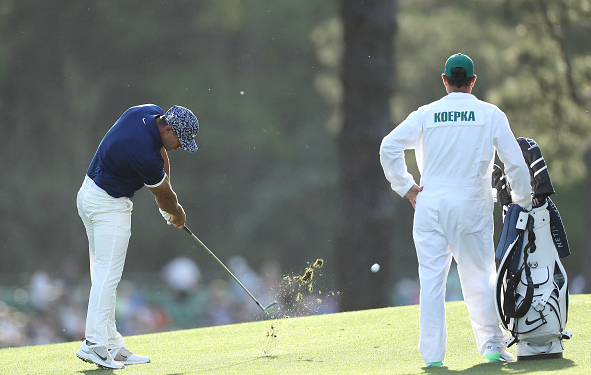
He missed the cut at the Masters — a second straight miss at Augusta.
T55 at the PGA Championship.
55th at the U.S. Open.
Missed cut at the Open Championship.
Four majors. Four finishes outside the top-50, two of them missed-cuts.
For a golfer whose identity had become almost inseparable from major-championship excellence, it was an astonishing collapse.
And behind the results was a player whose confidence had been battered along with his knee.
The version of Koepka later captured in Netflix’s Full Swing was almost jarring.
This was the man who had once projected such overwhelming self-confidence that indifference itself seemed part of his competitive persona. Now he was openly questioning whether he could compete with the game’s best players week after week.
This wasn’t the swaggering Koepka of 2018 or 2019. It was a great golfer wondering whether that golfer still existed.
In June Koepka signed with LIV Golf.
It would be unfair to state as fact that he joined LIV because he believed his career was finished. Only Koepka can fully explain his motivations.

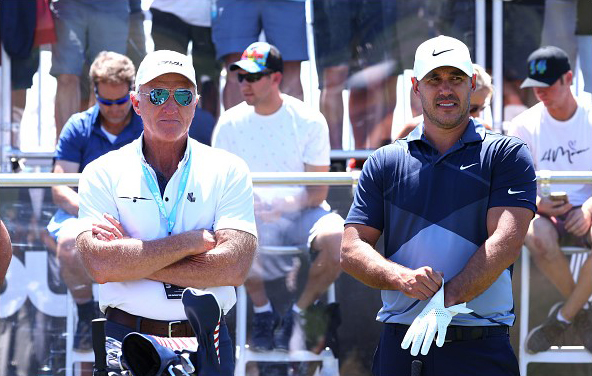
But the context matters: he was physically compromised, coming off increasingly poor major results and privately questioning his ability to compete at the level he once had. Koepka later acknowledged that there had been a point when he wasn’t sure whether his career might be over.
Then someone offered enormous, guaranteed money. It’s not difficult to understand why people wondered whether Koepka was cashing in while he still could.
By the end of 2022, that interpretation looked increasingly plausible.
And then came one of the strangest reversals of his career.
Six Weeks When Brooks Became Brooks Again
Koepka arrived at Augusta in April 2023 healthy again and looking almost reborn.


He nearly won.
Second place.
Then, roughly six weeks later, he arrived at Oak Hill for the PGA Championship. This time he finished the job.
Major championship No. 5.
For two consecutive majors, the old Brooks Koepka had returned almost completely. That’s important when interpreting Oak Hill today.
It wasn’t a random bolt of lightning.
It wasn’t yet Jack Nicklaus at the 1986 Masters, Tiger Woods at the 2019 Masters or Phil Mickelson at Kiawah in 2021 — an aging legend reaching backward years after his prime and somehow finding one more championship.
Koepka was only 33. And he hadn’t merely won Oak Hill. He had finished second in the previous major.
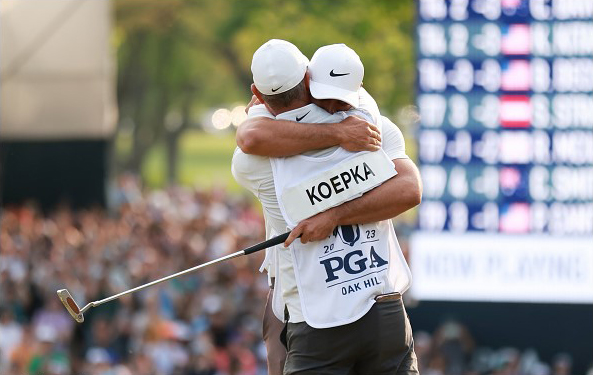
This looked like something more substantial: a short window in which Koepka’s repaired body, confidence, competitive intensity and major-championship instincts suddenly synchronized again.
For roughly six weeks, prime-level Brooks was fully accessible.
After three years of injuries and increasing volatility, it appeared his decline had been reversed.
Looking back now, it wasn’t.
Those Six Weeks Now Look Like the Exception
The longer Koepka goes without another major top-10, the more revealing that spring of 2023 becomes.
Consider the larger five-year picture: from 2022 through 2026 — five complete major seasons covering Koepka from age 31 through 36 — he has made 20 major starts.


He has produced two top 10s — a 10 percent top-10 rate.
Those two results just happen to have been extraordinary: second at the 2023 Masters chased by a win at the 2023 PGA Championship.
But they were consecutive.
In Koepka’s other 18 major starts over those five seasons, he has zero top 10s. That may be the statistic that best explains where his career has gone.
Eighteen majors reflecting the deteriorating baseline. Six remarkable weeks demonstrating that the old ceiling remained accessible.
Then it disappeared again. Since winning at Oak Hill, Koepka has now gone 14 consecutive majors without a top 10.
That’s not a slump anymore. It’s more than three full seasons of evidence.
And it makes Koepka’s insistence that all of this is happening during his “prime” increasingly difficult to accept.
Maybe 36 Isn’t Young in Brooks Koepka Years
The obvious objection is his age.
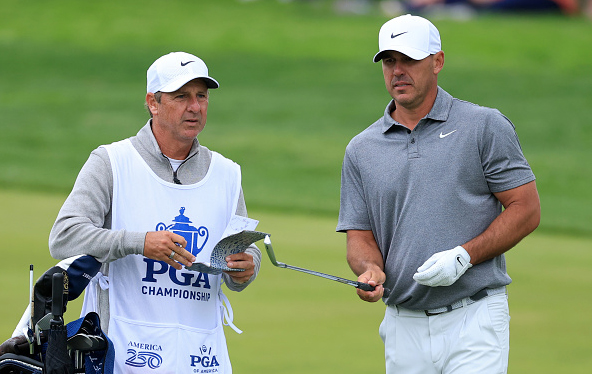
He’s 36.
Golfers win well beyond 36.
Of course they do.
But careers aren’t governed by a universal clock. Some players mature late. Some remain remarkably durable. Others accumulate physical and psychological mileage much earlier.
Koepka’s body has been through a lot.
Multiple knee problems.
Surgery.
Rehabilitation.
Wrist issues. Hip issues.
Years of compensating for pain.
And the psychological toll that accompanied wondering whether his body would ever allow him to play the golf his mind remembered.
Chronological age tells us Koepka is 36. His competitive odometer may tell a different story.
Looking back, maybe Brooks Koepka’s prime was just more compacted. But what a prime it was.
“Pathetic” May Be the Wrong Diagnosis
That’s why Koepka calling his current play “pathetic” is so interesting.

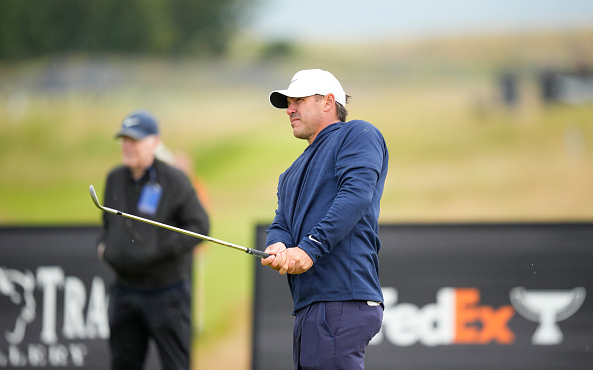
The word makes sense if he believes he is still fundamentally the same golfer who terrorized major championships in his late 20s.
If that Brooks is still supposed to exist, then these results must seem inexplicable.
But what if there isn’t some mysterious technical problem preventing prime Brooks Koepka from returning?
What if this simply is Brooks Koepka at 36?
Still talented.
Still experienced.
Still capable of exceptional golf.
But no longer able to summon it with anything resembling the frequency he once could.
That isn’t pathetic.
That’s what eventually happens to great athletes.
Sometimes it happens at 40.
Sometimes 45.
Sometimes earlier.
But Post-Prime Doesn’t Mean Finished

If Koepka’s prime was really over at 33, that doesn’t mean his last major championship has already been won.
Golf history is filled with reminders that a great player’s prime can disappear long before his championship ceiling disappears completely.
Jack was 46 when he won the 1986 Masters.
Tiger was 43 when he won Augusta in 2019.
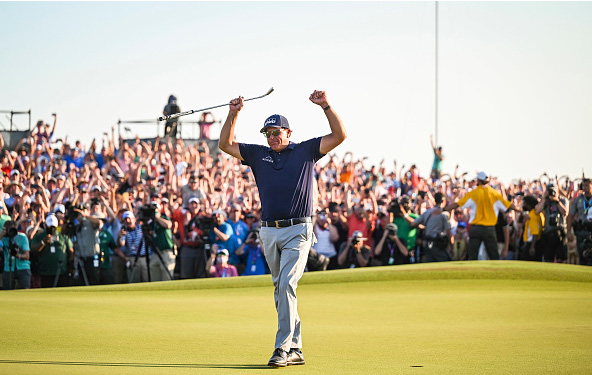
Phil was 50 when he won the 2021 PGA Championship for major No. 6.
Tom Watson was 59 when he came within a par of winning the 2009 Open Championship.
None were still in their primes.
That’s the point.
They could no longer live at their historic ceiling.
But for four days, they could still occasionally touch it.
That may be Koepka’s future.
Major No. 6 (and No. 7) Is Still Entirely Possible
In fact, Koepka has an enormous advantage over those examples.


Time.
He is only 36.
So, there is nothing remotely contradictory about believing two things simultaneously: Brooks Koepka’s prime is probably over.
And: Brooks Koepka may win another major championship.
Maybe more than one.
Suppose a 38-year-old Koepka arrives at the 2028 U.S. Open at Winged Foot in New York — a state where he’s won three of his majors — and something clicks.
His body feels good.
The course fits his eye.
The driver behaves.
Putts start falling.
Crowds start roaring.
He opens 69-68.
Suddenly Brooks Koepka is walking onto the first tee Saturday afternoon two shots off the lead.
Would he be a problem for the field?
Absolutely!
Because all five major championships walk onto that tee with him.
The experience remains.
The scar tissue remains.
The knowledge of how to win remains.
That’s the danger of the post-prime champion.
He doesn’t need to rediscover his prime.
He only needs to rediscover his ceiling for four days.


Koepka has years to find out.
But if he does eventually win major No. 6, it shouldn’t necessarily be interpreted as proof that “Brooks is so back.”
Perhaps it will mean something more interesting.
For four days, one of the great major champions of his generation simply found the old Brooks one more time.
His peak is gone. His prime appears to be gone.
But greatness has a much longer expiration date.


