


For years, much of the mainstream golf media has insisted it was simply following the facts when covering LIV Golf. But every so often, an event forces an uncomfortable question: were they reporting the story — or trying to shape it?
LIV Golf’s announcement last week that it has signed a major investor to a term sheet securing the league’s future into 2027 and beyond has become one of those moments.
Not because every question has been answered or every detail is public, but because the immediate reaction from many familiar voices wasn’t curiosity, it was dismissal.
Within minutes, the semantic pushback began:
“It’s a claim with no proof.”
“It’s just a term sheet.”
“It’s an investor, no investment has been made yet.”
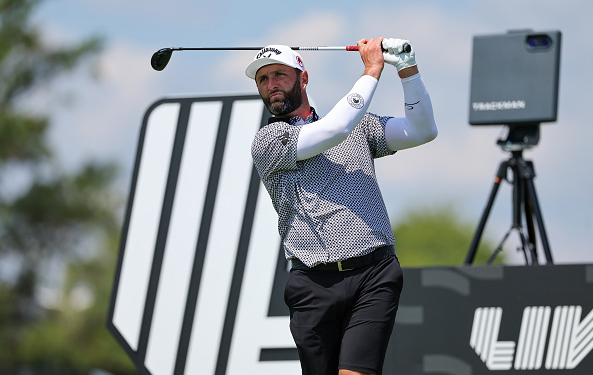
“Can they keep Bryson and Rahm?”
Technically, a signed term sheet is not the same as a closed investment. But the reaction went beyond legal precision. It reflected a reflex to downplay any development that complicates years of confident predictions that LIV was running out of runway.
The same commentators who regularly amplify anonymous speculation about LIV’s collapse suddenly demanded courtroom-level proof the moment the league announced positive news.
That inconsistency is hard to ignore.
From Reporting to Gatekeeping
Golf media once served as an intermediary between the sport and its fans.
Increasingly, parts of it behave more like an exclusive club deciding which narratives deserve legitimacy.
Certain players receive consistent benefit of the doubt. Others are met with skepticism by default.
The PGA Tour is treated as the sport’s natural center of gravity, while LIV is framed as an outsider that must repeatedly justify its existence — even after four seasons, global events, television deals, a roster of major-winning stars, and a publicly stated path beyond 2027.
Healthy skepticism is journalism. Selective skepticism becomes something else.
The Credibility Gap

The issue isn’t that analysts got predictions wrong. Everyone does.
It’s the confidence with which those predictions were made.
For years audiences were told LIV wouldn’t survive, that players would return, that sponsors and broadcasters would walk away, and that investment would dry up. Reality has been more complicated.
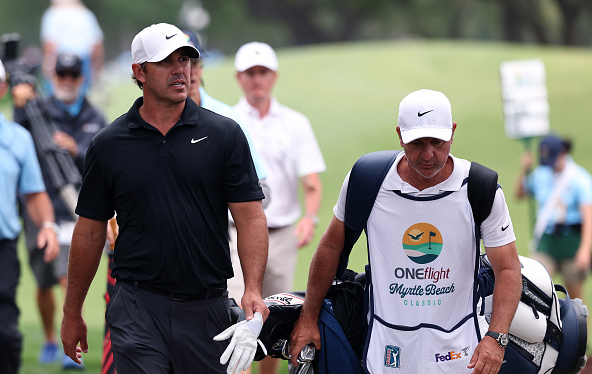
Even this year, familiar narratives resurfaced around Brooks Koepka’s return to the PGA Tour — that he would rediscover his “old self,” sharpened by traditional competition and a full schedule. It’s a familiar framing: that LIV players inevitably regress, lose edge, or become less competitive outside the PGA Tour ecosystem.
Koepka’s results have not supported that storyline. He struggled for consistency all season, posting just a single top-10 finish (T9) and sits outside the top 100 in the world rankings despite playing on the points-rich PGA Tour. He also failed to qualify for the FedEx Cup playoffs — an outcome that would have once seemed unthinkable upon the announcement of his return.
Yet the broader narrative rarely adjusts. Instead, each new data point is often absorbed into a pre-existing conclusion.
At some point, audiences notice.
Fans Have Moved On

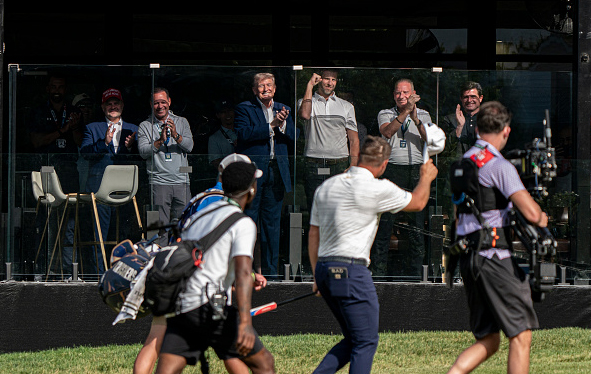
The bigger disconnect may no longer be between LIV and the PGA Tour, but between golf media and golf fans.
Social platforms have removed the old gatekeeping function. Fans watch full interviews, read transcripts, and compare headlines against primary sources in real time.
When viewers can hear an executive announce an investment agreement directly, then see it reduced to a “claim” in coverage, trust naturally erodes.
The gatekeepers no longer control the gate.
A Reckoning, Not a Victory Lap

None of this suggests LIV has resolved every question about its model, ownership, or long-term viability. Those remain valid areas of scrutiny.
But journalism loses credibility when it consistently reframes developments that don’t fit its prior assumptions.
The lesson isn’t just about LIV Golf. It’s about the danger of speaking with certainty about an evolving situation and then struggling to adjust when reality doesn’t conform.
Credibility isn’t restored by shifting language around inconvenient facts. It’s restored through acceptance and recalibration.
Golf media doesn’t need to endorse LIV or oppose the PGA Tour. It simply needs to separate reporting from narrative preference.


