
















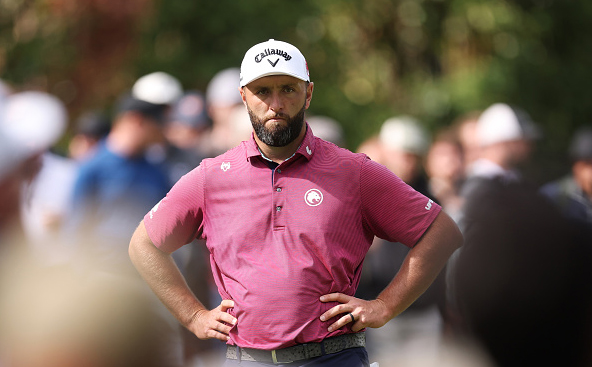
Maybe this was the bottom.
For Jon Rahm, it would certainly be difficult to go much lower.
The two-time major champion, former World No. 1 and still one of the most highly regarded players in professional golf finished dead last at the BMW PGA Championship at Wentworth after rounds of 78 and 77 left him at 11-over par.
Not near the bottom.
Not merely outside the cut line.
Last.
Rahm finished behind every one of the 138 players who completed 36 holes, producing one of the most shocking tournament performances of his professional career.

For almost any golfer, it could be dismissed as one awful week.
For Rahm, however, Wentworth increasingly looks like something more significant: the culmination of a surprisingly poor stretch of golf from a player who, at only 31 years old, should theoretically still be squarely within his prime.
And perhaps most importantly, this is what an actual Jon Rahm slump finally looks like.
Remember When Rahm Had Supposedly Already “Lost It”?
That distinction matters because the golf media spent much of the previous two years telling us Rahm was already struggling.
From the moment he left the PGA Tour for LIV Golf ahead of the 2024 season, nearly every stretch in which Rahm failed to win was treated in some corners as evidence that his game had declined.

The narrative became particularly loud during 2024 and 2025.
Rahm wasn’t dominating.
Therefore, Rahm supposedly wasn’t himself.
LIV wasn’t pushing him.
His sharpness had disappeared.
The move had somehow diminished one of the best players in the world.
There was just one problem.
The results never really supported the premise.
From the beginning of his LIV career through the 2026 PGA Championship, Rahm produced an almost absurd level of week-to-week consistency.
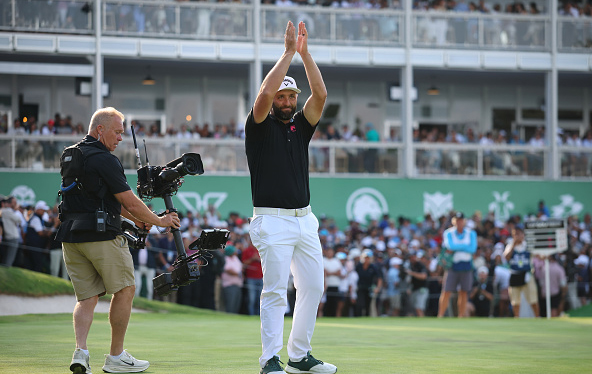
He piled up LIV top-10 finishes at a rate that bordered on automatic, including 31 top-10s in his first 34 regular-season LIV starts.
And despite constant suggestions that LIV competition was leaving him ill-prepared for major championships, Rahm’s major record remained remarkably strong.
Across his first nine major starts following the move, Rahm recorded five top-15 finishes, including four top-10s.
Then came the 2026 PGA Championship.
Rahm finished solo runner-up.
At that point, the broader body of work was difficult to square with the idea that LIV Golf had somehow ruined Jon Rahm.
A player supposedly suffering through a decline had spent two-plus years rarely finishing outside the top 10 in LIV events while simultaneously finishing inside the top 15 in more than half of his major starts.
If that was Rahm struggling, it was a peculiar definition of struggling.
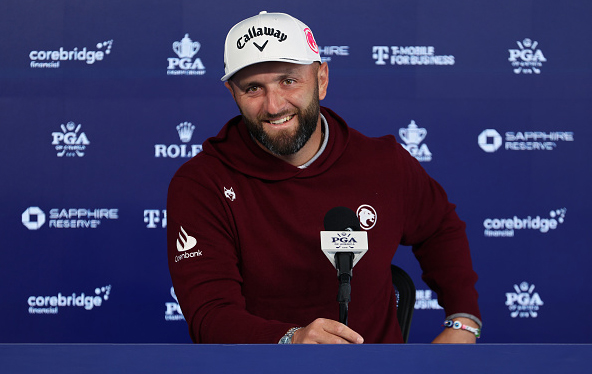
He wasn’t necessarily winning at the rate expected of a player of his stature.
But there is an enormous difference between not winning enough and not playing well.
Rahm was still playing very well.
Which is precisely why his current stretch deserves far more attention.
Because now we are actually seeing what poor Jon Rahm golf looks like.
This Time, the Numbers Really Are Bad
Rahm’s recent results tell a much different story than the player who for years seemed almost incapable of disappearing from contention.
Over his 10 most recent individual starts, Rahm has produced only two top-10 finishes.
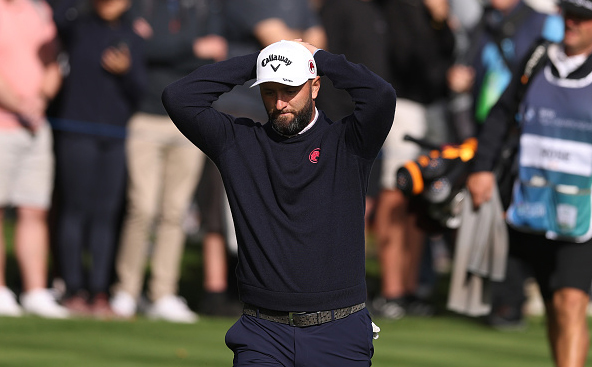
Both were runner-up performances — at the PGA Championship and LIV Golf Indianapolis.
Those two weeks demonstrated that Rahm’s elite ceiling clearly hasn’t disappeared.
Everything surrounding them, however, has been remarkably ordinary by his standards.
Among his other eight starts, Rahm has recorded only one additional top-20 finish: a T16 at LIV Golf Korea.
His next-best results are a pair of T23 finishes at LIV Golf UK and the Irish Open.
Six of those 10 starts have ended outside the top 35.
Two have ended in missed cuts.
And now came Wentworth.
78. 77. 11-over par. Dead last.
That isn’t media interpretation.
It isn’t an argument over whether LIV fields are strong enough.
It isn’t somebody attempting to manufacture decline from a stretch of eighth- and ninth-place finishes.
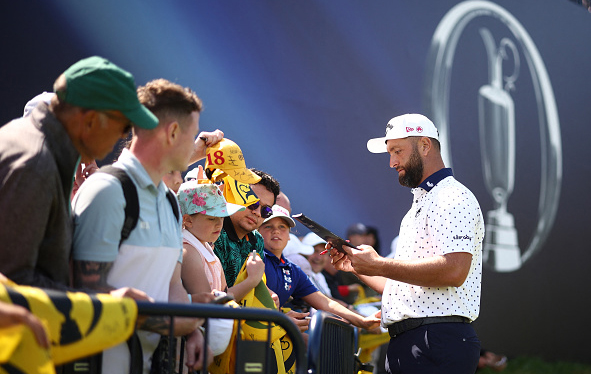
This is genuine poor form.
For years, Rahm’s bad weeks generally meant finishing somewhere around 15th or 20th instead of contending for the trophy.
Now they can mean finishing 36th, 40-something, missing the cut, or, apparently, finishing 138th out of 138.
That’s a dramatically different player profile.
The Irony of the Old LIV Narrative
In hindsight, the criticism of Rahm’s first two-plus years on LIV looks even stranger when placed beside what we’re watching now.
Rahm could finish fifth, seventh or ninth on LIV and the discussion would frequently turn toward why he wasn’t winning.
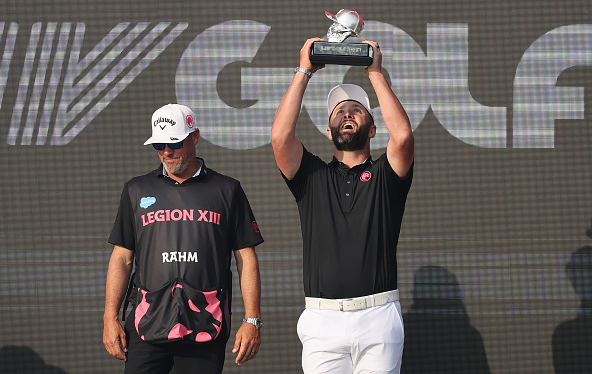
He could finish inside the top 10 of a major and the conversation might focus on why he wasn’t lifting the trophy.
The expectations surrounding Rahm were so enormous that consistently excellent golf was sometimes treated as evidence of decline simply because it wasn’t dominant enough.
That framing blurred an important distinction.
Rahm wasn’t playing badly.
Rahm was being judged against Rahm.
There is a difference.
When a former World No. 1 and two-time major champion establishes such an extraordinary standard, very good golf can look disappointing.
But disappointment relative to greatness is not the same thing as poor performance.
What Rahm has produced recently is.
The old LIV-era debate centered largely around whether Rahm was winning frequently enough.
The current debate is much simpler.
He’s suddenly struggling just to get onto the first page—or sometimes the second page—of leaderboards.
This Isn’t Supposed to Happen to Jon Rahm
Context matters here too.
Rahm isn’t a fading former champion playing out his late 30s or early 40s.
He’s 31 years old.
He’s a Masters champion.
He’s a U.S. Open champion.
He’s a former World No. 1.

And regardless of the distortions created by LIV Golf’s complicated relationship with the Official World Golf Ranking system, Rahm remains widely viewed as belonging in golf’s absolute elite alongside players such as Scottie Scheffler and Rory McIlroy.
That’s what makes this run so jarring.
Rahm built his reputation on consistency almost as much as victories.
There was seemingly always a floor beneath his game.
Even when he wasn’t winning, he was usually somewhere near the leaderboard.
That floor has suddenly disappeared.
And the poor results haven’t been confined to one format, one tour or one style of golf course.
They’ve appeared in LIV events.
They’ve appeared in majors.
They’ve appeared on the DP World Tour.
That variety makes the trend harder to dismiss as simply a bad fit with one course or one isolated tournament.
There is also some significant life happening away from the golf course.
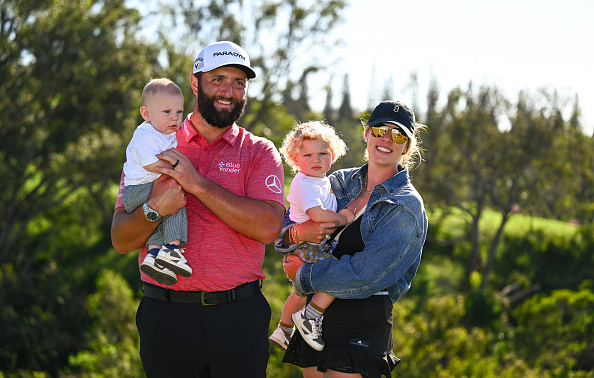
Rahm and his wife, Kelley, are expecting their fourth child — another daughter — in the coming weeks.
Rahm mentioned the impending arrival multiple times at Wentworth, saying that welcoming the “little one” would rank above anything he accomplishes on the golf course this year.
That shouldn’t be used as an explanation for his recent results — Rahm certainly hasn’t offered it as one — but it is relevant context as one of golf’s most intense competitors navigates the strangest sustained stretch of poor form of his prime.
The Hope: Wentworth Was Rock Bottom
There have obviously still been flashes.
A golfer doesn’t accidentally finish runner-up in a major championship.

Neither does someone casually contend at the highest levels of professional golf if the underlying talent has vanished.
Rahm’s PGA Championship performance showed that his best golf remains somewhere inside him.
His runner-up at LIV Indianapolis showed it again.
But the Rahm we’ve watched over the past several months has become strangely binary.
There have been a couple weeks where he has looked like Jon Rahm again.
And then there has been everything else.
That’s why Wentworth feels potentially important.
Perhaps September 2026 will eventually be remembered as the moment this prolonged slide finally bottomed out — the ugly tournament that forced whatever technical, competitive or mental reset was necessary.

Because at 31, there is little reason to assume Rahm’s elite years should already be behind him.
But reputations ultimately can’t substitute for leaderboards.
And the leaderboard at Wentworth delivered the most shocking evidence yet that something is clearly not right with one of the most talented golfers of his generation.
For two years, critics kept insisting Jon Rahm was struggling when the results said otherwise.
Now the results are finally saying it too.
Jon Rahm finished 138th out of 138.