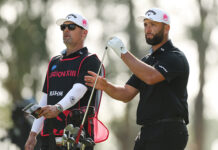










In a dramatic show of commitment to the embattled breakaway league, star LIV Golf players are reportedly banding together to inject up to £150 million ($201 million) of their own money into the circuit.
The goal is to keep it alive for the 2027 season while giving CEO Scott O’Neil critical breathing room to court new sponsors and investors for the long term.
The proposal comes as Saudi Arabia’s Public Investment Fund (PIF) — which has poured more than £4 billion into LIV since its launch — confirmed it will end its financial backing after the conclusion of the 2026 campaign.
The move has thrust the league into survival mode, with O’Neil, the former NBA executive brought in to professionalize the operation, now tasked with transforming it into a sustainable business.
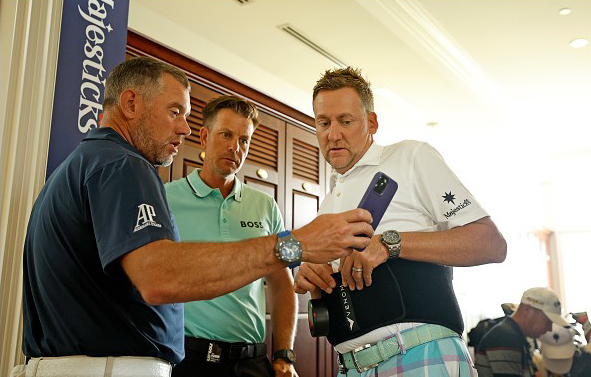
According to reports, several of LIV’s biggest names are on board with the player-funded rescue plan, including Bryson DeChambeau, Ian Poulter, Lee Westwood, and others. Jon Rahm’s support is viewed as particularly pivotal.
In exchange for their contributions, participating players would receive equity stakes in a restructured “LIV Golf 2.0,” giving them a direct financial interest in the league’s future success.
A Vote of Confidence from the Fairways
The initiative is being framed not just as a financial lifeline but as a powerful demonstration of belief in the product. Many players earned life-changing sums when they joined LIV, and chipping back in is seen as a way to repay that faith while buying time for the league to stand on its own.
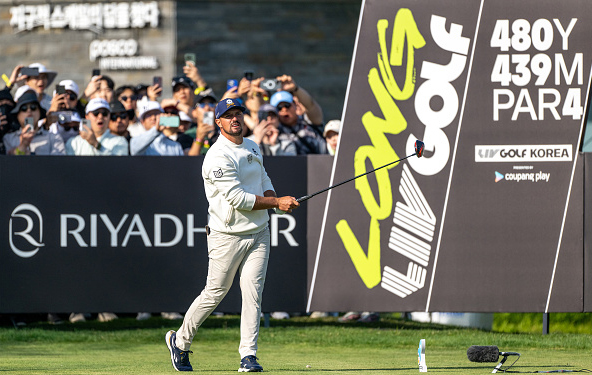
DeChambeau, speaking ahead of LIV’s event in South Korea, struck an optimistic tone despite the uncertainty.
“I’m giving all I can to make it happen,” he said. “We all have optimism that there is a business plan that makes sense for team golf.” He acknowledged surprise at PIF’s withdrawal but emphasized that “one door closes, another opens,” and highlighted the potential of team-based golf for grassroots growth and global appeal.
Poulter, a vocal LIV advocate, hinted at developments last week, stating he did not believe the league would fold at the end of 2026.
Leaner, Meaner Schedule Ahead — With a Title Sponsor Playbook
Under the rescue plan, the 2027 schedule would likely be trimmed from 14 events to around 10, with a sharper focus on well-attended international stops such as those in Australia, South Africa, and the UK (at the JCB course). U.S. events have struggled with attendance and are expected to be scaled back significantly, potentially limited to Donald Trump’s courses in Florida and Virginia. The Saudi stop would also be dropped.
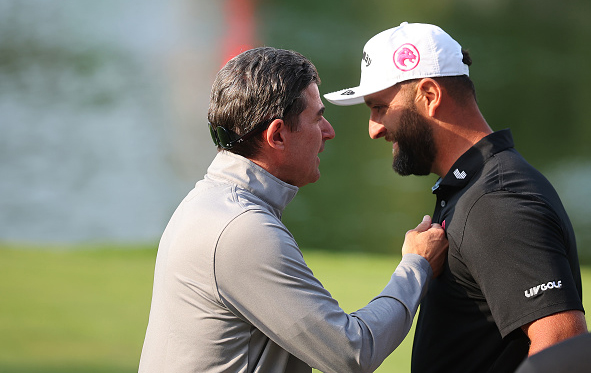
Even with the player injection, prize money would almost certainly face cuts. A full 10-event slate at current levels would cost around £225 million, meaning participants are also bracing for reduced paydays. Existing sponsorship deals with brands like HSBC, Rolex, and MGM Resorts provide some foundation, but more outside investment is essential.
LIV insiders believe the league can adapt the same title sponsorship model the PGA Tour is aggressively pursuing for 2028. The PGA Tour is seeking up to $30 million annually per title sponsor for up to 10 new events in its overhauled two-tier structure. That model features a premium Tier 1 (main track) of 16 regular-season signature events with 120-player fields and $20–25 million purses, plus three playoffs and four majors.
LIV executives feel they can replicate this approach but at a significantly lower price point, thanks to their compact 60-player fields — roughly half the size of PGA Tour events. This leaner format reduces operational costs while maintaining high star power and team-based excitement, potentially making title sponsorships more attractive to brands seeking premium, concentrated exposure.
To further improve the bottom line, LIV Golf executives are also planning to slash over-the-top expenses that are “nice-to-haves” rather than essentials for running a high-end professional golf tour. This includes trimming entertainment-related costs and scaling back or eliminating premium digital features such as the “Any Shot, Any Time”/featured groups and every-shot tracking in the LIV Golf app. The subscription service has reportedly struggled with subscriber numbers nowhere near enough to break even on production costs — a challenge that prompted the PGA Tour to offload its comparable premium shot-tracking service to ESPN+ to control expenses.
O’Neil has been actively shopping the league, reportedly seeking up to $250–350 million in fresh capital. He has projected profitability within two to three years under a more disciplined model, down from his earlier five-to-ten-year timeline. The players’ fund would cover much of the 2027 gap, allowing him to negotiate from a position of stability rather than desperation.
High Stakes for All Involved
For the players, the move is a calculated risk. Many have faced backlash for joining LIV and see its continuation as key to justifying their career choices and maintaining elevated earning power.
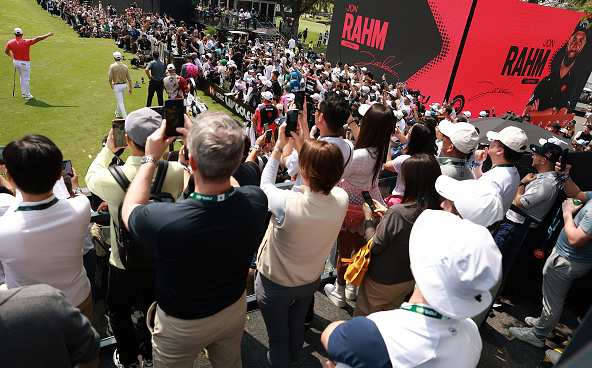
Equity ownership could prove highly valuable if the league finds its footing — or represent further losses if it ultimately fails. For O’Neil, the player buy-in would be a major vote of confidence that strengthens his hand with potential investors.
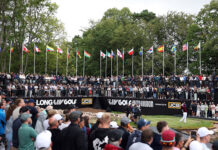
LIV has shown strong crowd numbers at select international events (over 100,000 in Australia and South Africa), demonstrating the format’s appeal when executed well.
Whether this player-led rescue fully bridges the gap remains to be seen. But in a sport often criticized for its resistance to change, the sight of millionaire golfers reaching into their own pockets to save their league — while eyeing a more efficient sponsorship model than even the PGA Tour — marks a remarkable chapter in golf’s ongoing evolution. As DeChambeau put it, if everyone bands together, “there’s an opportunity here.”
The coming weeks, as players gather and negotiations intensify, could determine whether LIV tees it up in 2027 — or becomes another footnote in professional golf’s turbulent history.