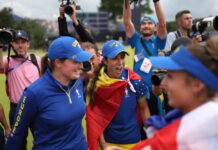















The Solheim Cup apparently had everything a television executive could reasonably request.
A picturesque European setting. National pride. Match play. A close competition. Genuine tension. And, entering Sunday singles, an 8-8 score with the Cup completely up for grabs.
Yet, America mostly shrugged. Only 179,000 viewers watched Saturday’s coverage on Golf Channel. Even more remarkably, that number fell to 170,000 for Sunday singles, despite the deadlocked score.
For comparison, Sunday coverage of the 2023 Solheim Cup in Spain averaged 277,000 viewers.
That’s roughly a 40-percent decline.
There will undoubtedly be explanations offered: The time difference. Golf Channel versus a larger broadcast network. Marketing budget. Competition from football. Streaming fragmentation. The increasingly complicated television landscape.
All of those things probably matter.
But there’s another explanation women’s golf may be reluctant to confront:
The Solheim Cup has a star-power problem. Not a talent problem. A star problem.

Those are two very different things. Great golfers aren’t automatically television stars
Look at the American roster: Nelly Korda. Angel Yin. Jennifer Kupcho. Yealimi Noh. Auston Kim. Lauren Coughlin. Allisen Corpuz. Andrea Lee. Alison Lee. Lindy Duncan. Megan Khang. Rose Zhang.
Now ask the average American sports fan — not the LPGA diehard, but the casual fan who watches the Masters, knows the names of Scottie Scheffler and Rory McIlroy and might tune into team golf — how many of those names they immediately recognize.
That’s the problem.
The one unquestioned American superstar is Nelly Korda, the No. 1 player in the world and a multiple-major champion who entered the Solheim Cup after a four-win season that included two majors.
Korda looks like a superstar. She plays like a superstar. Sponsors understandably treat her like a superstar.
But is Korda naturally built for the modern attention economy?
On the golf course she is often intensely serious, controlled and emotionally restrained. You don’t get many fist-pumping explosions, animated conversations with the crowd or made-for-social-media theatrics.
That’s not criticism of how she competes. Her job is to shoot the lowest score possible, not audition for reality television.
But television is still television.
Charisma matters. Emotion matters. Personality matters.
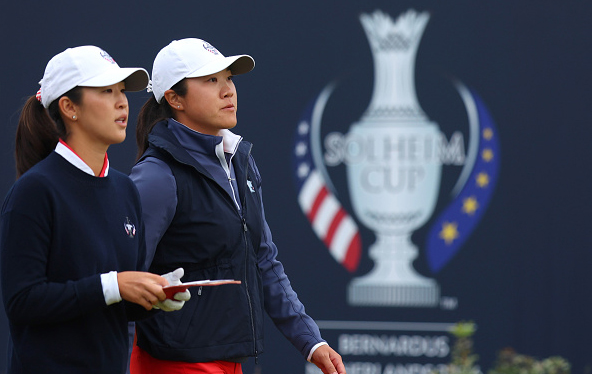
And when the biggest American star appears to be almost robotic, the players surrounding her need to provide some of what she doesn’t.
Too often, they don’t.
Where are the personalities?
This is where discussions about women’s golf can get uncomfortable, because people immediately confuse a marketing observation with a criticism of the players themselves.
There is absolutely nothing wrong with being quiet, disciplined, introverted or hyper-focused.
In fact, those characteristics might help make someone an elite golfer.
They don’t necessarily make someone compelling television.
The LPGA has an abundance of highly polished players whose competitive personalities are built around composure: walk to the ball, analyze the shot, execute it, (barely) acknowledge the crowd and move along.
That’s admirable. It can also become visually repetitive.
What television desperately needs are contrasts.
The fiery player. The trash talker. The eccentric. The emotional leader. The player who pumps up the crowd. The player casual fans love. The player opposing fans love to hate.
The player whose interview gets clipped 10 million times because nobody knows what she’s going to say.
Women’s golf has had those personalities before.

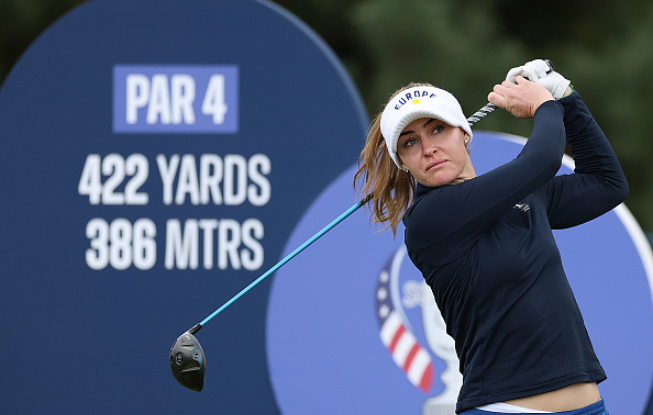
And Europe still has one of its best examples in Charley Hull, whose good looks, charisma, and swagger have made her one of the game’s most recognizable personalities. Europe’s roster also contained established Solheim personalities such as Carlota Ciganda and Leona Maguire.
The United States needs more of that.
The relevant issue is how professional golf encourages its players to present themselves.
Many elite golfers — regardless of background — are raised in systems that reward discipline, repetition, emotional control and obsessive focus. Those traits produce tremendous golf.
They don’t automatically produce entertainers.
And the LPGA has historically had difficulty converting elite performance into recognizable celebrity.
That’s the real problem.
At some point, refusing to examine the marketability of the players themselves becomes avoidance.
You cannot manufacture a superstar simply by announcing that someone is one.
World rankings don’t create celebrities.
Neither do press releases.
Neither does repeatedly telling viewers how incredibly talented everyone is.
Fans need a reason to care who wins.
That connection might come through greatness. It might come through humor. Beauty. Fashion. Swagger. Rivalry. National pride. Controversy. Vulnerability. Trash talk. Social media. An unforgettable backstory.
Professional sports have always worked that way.
The 2026 Solheim Cup produced compelling competition.
What it didn’t have was enough people America felt compelled to watch.
And until women’s golf solves that problem, changing broadcast windows, promotional campaigns or formats will only nibble around the edges.
Golf creates great players through scorecards.
Television succeeds by creating stars.
Right now, the LPGA has considerably more of the former than the latter.